CFHA’s 2024 Annual Report highlights a year of meaningful progress. From strengthening our technical assistance efforts to growing our training and event offerings, we continued to support members and partners in advancing integrated care. This report shares our accomplishments, financial performance, and the work that will guide us into 2025.
News

No One Cares About Strategic Plans
It’s true. The large majority of us roll our eyes when it comes to strategic plans and their myriad of KPIs, other acronyms and promises about the future. The truth is that what is most essential about an organization’s viability and efficacy is its strategic vision, not it’s guesses about what it could accomplish in an undetermined future. To this end we at the Collaborative Family Healthcare Association: The Integrated Care Association, present our version of a strategic plan.
It’s probably not fair to call it a strategic plan, but it most certainly is the end-result of our strategic planning process. In it we reaffirm our mission and values, we update our identity statement, update our strategy screen and ask ourselves the one big question we think will dominate our sphere in the next few years. In short, we are attempting to be ready for whatever the wind blows our way as we continue the work of organizing the integrated care community, creating high quality content and high value consultation.
Our mission and values remain unchanged with the exception of a reorganization of our values. Whereas before our values were listed in bullets, now our values summarize our commitments in sharp statements. This should help us better communicate our values compared to a laundry list of statements in different domains. For example, we remain committed to both fostering health equity and evidence-based care. Now our values are reflected in the statement:
- Disseminating and operationalizing evidence-based practices for patients and families who are at risk for health inequities through integrated care practice and policy
Our identity statement is similar to our past identity statement but now indicates a willingness to partner beyond North America where our contributions might be helpful. The CFHA board also made sure that our support of professionals included and named all stages of career development.
by serving aspiring, emerging, and experienced integrated care team members…
Our strategy screen provides a series of questions the staff and board can use when considering new opportunities or challenges. This mechanism provides a systematic way to process changes in the environment and assure that consensus emerges from our planning work. This also creates efficiency since we all are working from the same strategy screen.
Our “Big Question” rounds out the document with a question we will keep top-of-mind as go about our work.
How do we refine and preserve our identity while adhering to our values and growing as a source of influence in our dynamic healthcare system?
This question comes about from an acknowledgment on the part of the board that as we grow our identity will be challenged. How do we remain faithful to our purpose even as we experience success? How do we continue the process of figuring out who we can best be in the space of promoting integrated care as the environment inevitably shifts around us?
So, no there are no KPIs in this document. In fact, the document itself is not even the most important product of the process, which by the way is modeled after this not-for-profit strategic planning approach and this facilitation approach. The most important product of the document is a board and staff that are unified and prepared to face challenges and opportunities in an ever-changing healthcare landscape. That preparation helps lead to the business and strategic decisions that are the traditional goal of strategic plans. It also helps our Integrated Care Association remain nimble and adaptable, strengths of small not-for-profits like CFHA.
BTW- We do value data, so we have internal core metrics we keep and report on both at the individual staff level and quarterly at the team level. So we are definitely not anti-metrics!

Integrated Care: A Critical Strategy for Chronic Illness, Prevention, and Pediatric Health
RE: Talking Points for CFHA Members Engaging Policymakers, Medicaid Leaders, and Local Officials
Integrated care—the coordination of medical and behavioral health within primary and specialty settings—is a key solution to the most pressing health issues of our time. It is also perfectly aligned with the vision of Make America Healthy Again (MAHA): the root causes of chronic disease, promoting wellness, and protecting our children and adolescents.
Why Integrated Care Supports the MAHA Platform
Chronic Illness Root-Cause Care
Integrated care treats chronic conditions like diabetes, heart disease, and chronic pain by pairing medical management with behavioral support (e.g., stress reduction, adherence strategies, lifestyle change). It reduces over-reliance on pharmaceuticals and increases patient agency.1
Pediatric Health and Early Intervention
Behavioral health integration in pediatric settings helps children and families address anxiety, trauma, developmental delays, and family stress—before these become lifelong conditions.2
Prevention and Health Autonomy
Integrated care empowers patients through early intervention, behavior change support, and shared decision-making. It helps prevent escalation of mental health and physical conditions through timely, personalized support.3
Policy Recommendations for State and Federal Leaders
- Fund Integrated Care Teams in Primary & Pediatric Clinics
- 1.1. Allocate Medicaid and federal resources to support embedded behavioral health in routine medical care settings including models such as PCBH and CoCM.
- Build the Workforce for Community-Based, Whole-Person Care
- 2.1.Invest in training Behavioral Health Consultants, care managers, consulting psychiatrists, peer support specialists and community health workers specifically for primary care and prevention-focused roles.
- Enable Same-Day, Behavioral Health Support
- 3.1.Reform payment and regulation to support brief, evidence-based interventions for mental health and substance use—especially in early stages and for populations with poor access to care.
- Incentivize Measurement-Based Preventive Care
- 4.1.Promote simple, scalable technology tools to track behavioral health symptoms like we do medical labs—ensuring progress, accountability, and patient-centered planning.
What’s at Stake
- 60% of U.S. adults have a chronic illness
- Pediatric behavioral health crises are escalating
- Substance use deaths and anxiety diagnoses continue to rise
Footnotes
- https://pubmed.ncbi.nlm.nih.gov/21190455/ ↩︎
- https://pubmed.ncbi.nlm.nih.gov/34807644/ ↩︎
- https://pmc.ncbi.nlm.nih.gov/articles/PMC8412979/
Photo by Andy Feliciotti on Unsplash ↩︎

CFHA Board Response To Federal Executive Actions
RE: When it feels like our backs are against the wall.
To: Our Members & The Larger Healthcare Workforce
Over the last several weeks …
- If you have been worried or deeply concerned by federal policy changes that impact the healthcare workforce,
- If you have been directly or indirectly affected by executive orders, funding changes, or the darkness of the national rhetoric,
- If you are a member of a community that is a prime target for policies that threaten your safety and dignity,
- If the status of your ability to stay in this country is in question,
We at CFHA want to share with you: you are not alone.
Our members across the country are directly impacted or work in communities deeply impacted by the series of executive orders that have disrupted millions of lives. The truth is, many of us, depending on our social, economic, and/or racial status in American society, have been here before and carry the legacy of communities bruised by political meanness, subhuman rhetoric, and undignified policies.
We believe that the dis-ease and unexplainable lament we feel—emotions that are necessary and appropriate—stems from the loss of our individual and collective ability to do the work of equity with intention, visibility, and support. A significant dimension of this real loss is the ability to explicitly do what we deeply value and the fear that arises with the loss of things we cannot get back. We also lament the loss of trust and the pain we feel as we witness the erosion of the gains in equity built through deep vulnerability, especially by people of color who bore the weight of such work.
There are also real losses of funding and human capital that have accompanied these federal directives and those that still lie ahead in the federal budget process. While we stake no political claim as a not-for-profit, we do call out the obvious: healthcare and the healthcare workforce are not the enemies of good governance and we should not be targeted as the cause of macro-economically related financial circumstances.
We will do what we have always done – integrate ourselves in locations where our people are and hold space for each other. Here are some of the concrete things we can do together:
- We will schedule community conversations to hold space for connection and to be present with our dis-ease and lament. Look for calendar invites. We look forward to seeing you.
- Ask your SIGs to convene, share, and hold space. Reach out to the Board of Directors if you need someone to be present or facilitate.
- We will curate targeted podcast episodes to share new strategies and learnings.
- We will remember our past – the conditions our beloved women and men endured to give us the values and freedoms we have today and to remind ourselves that we have overcome before.
- We will continue to gather intelligence from around the country and share what we have learned.
- We will partner with like-minded organizations to promote sustained workforce funding and protections.
- We will keep reminding you and ourselves to care for ourselves and each other.
We have been intentional in the use of the word, lament. Drawing from ancient traditions, lament is more than just sadness, rather it is necessary to help us unfreeze from our natural response to traumatic environments. As all of you know, the issue is not that these rough-edged emotions are present but rather our refusal to feel them. Lament reminds us to feel so that we can find clarity to act. We issue this memorandum as a first-step of many and look forward to our continued partnership towards healthcare that integrates physical and behavioral health seamlessly.
With equity, peace, and resistance in mind,
Jason Herndon, President
Monica Harrison, Treasurer
Deepu George, Immediate Past President
The CFHA Executive Committee on behalf of the Board of Directors

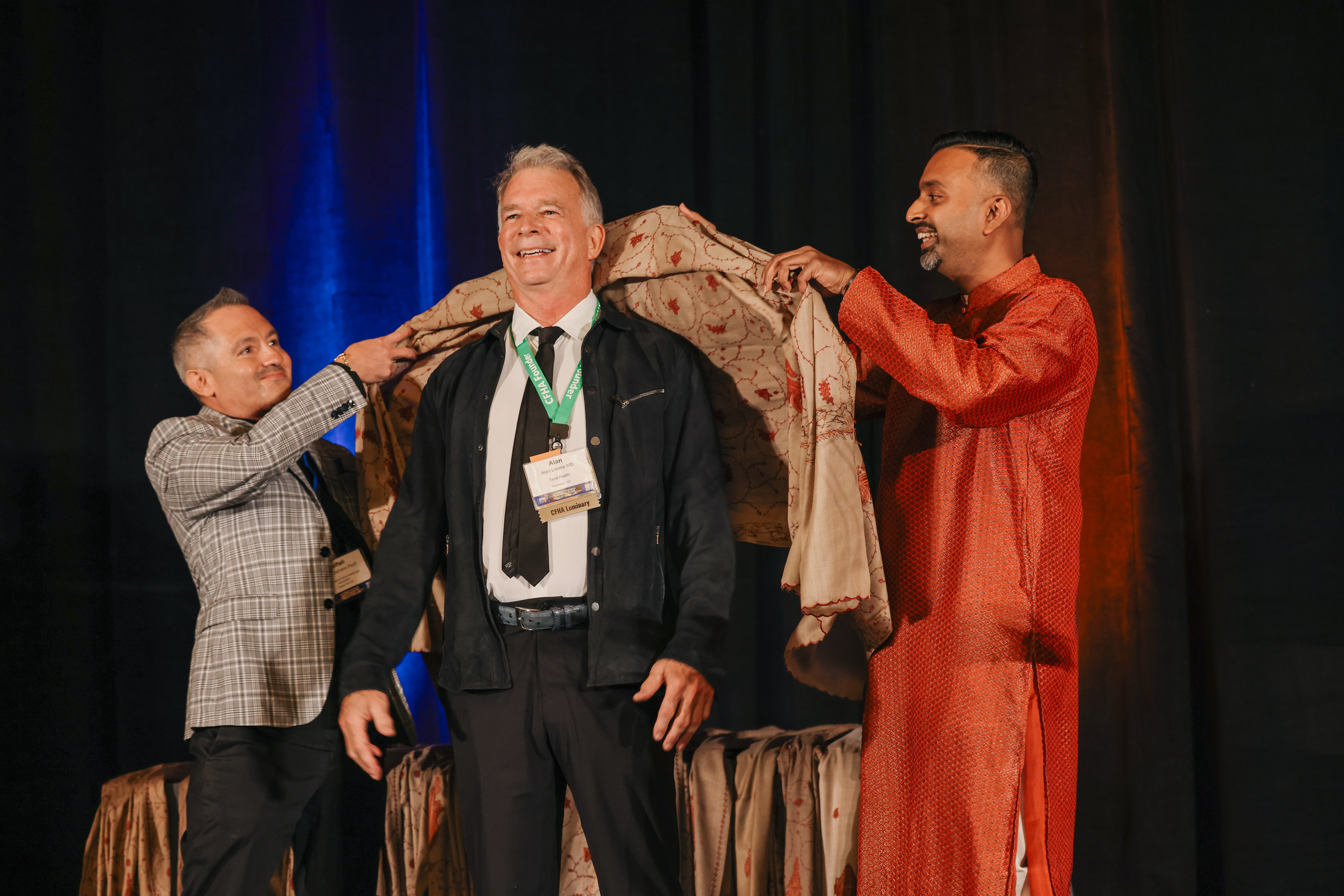
Celebrating Excellence: CFHA 2024 Award Winners

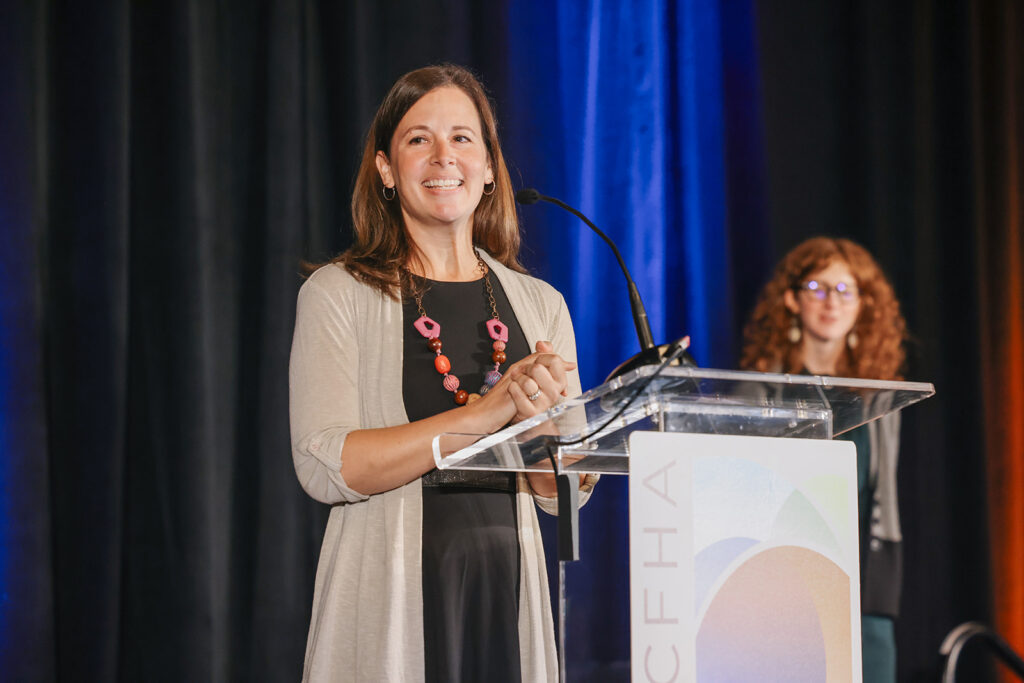
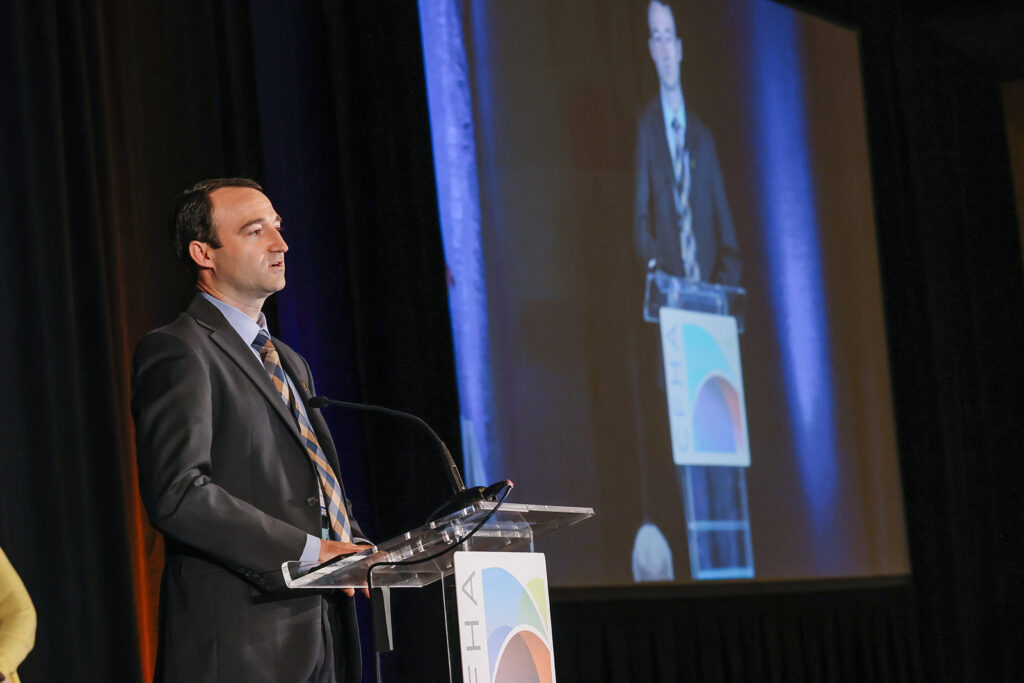
At this year’s CFHA conference in San Antonio, we were thrilled to recognize the outstanding contributions of individuals and organizations who exemplify the spirit and mission of integrated care. These awardees inspire us all with their dedication, innovation, and impact. Join us in celebrating their achievements!
Aimee Burke Valeras – Don Bloch Awardee

This award is the quintessential organizational award for members who have advanced the field of collaborative care, and who show intellectual, behavioral, and relational qualities that exemplify Don’s excellence and contributions.
Dr. Aimee Burke Valeras has been a transformative leader in the integrated healthcare community, seamlessly blending the science of medicine with the art of humanity. Since 2009, her contributions have spanned scholarly work, creative innovation, and advocacy for underrepresented communities. With a Ph.D. from Arizona State and clinical experience at Dartmouth’s Family Medicine Residency, she has shaped the vision of integrated care. Her academic rigor, combined with her creative approaches—like developing an integrated care Monopoly game—has inspired learners and colleagues to think outside the box and approach care in innovative ways.
Dr. Valeras is also a passionate advocate for marginalized communities, consistently championing individuals who are differently abled, racially diverse, or under-resourced. Through her stories, poetry, and group facilitation, she helps others reflect on shared experiences of loss, wonder, and compassion. Her work with organizations like Artcine and CFHA has created lasting impacts by bringing together providers, patients, and communities in the healing intersection of art and medicine. A true visionary, Dr. Valeras carries forward the legacy of Don Bloch, dedicating her career to advancing integrated care with creativity, intellect, and heart.
Elizabeth Zeidler Schreiter – Collaborative Care Model Award

This award recognizes individuals who have made outstanding contributions to health care through their commitment and use of the Collaborative Care (CoCM) model.
Dr. Elizabeth Zeidler Schreiter, Psy.D., is a dedicated leader in advancing behavioral health integration as the standard of care. With over 15 years of experience as a clinical health psychologist and a senior leader at Access Community Health Centers, Dr. Zeidler Schreiter is known for her passionate advocacy, deep knowledge, and impactful work on integrated healthcare teams. Her commitment to improving patient care aligns with CFHA’s mission to unite traditionally separate healthcare services and promote integrated behavioral healthcare for whole-person health and health equity.
As a subject matter expert in the Collaborative Care Model (CoCM), Dr. Zeidler Schreiter has made significant strides in advocating for Medicaid and payment reforms in Wisconsin, helping community health centers adopt integrated care models. Her leadership in these efforts has improved healthcare delivery systems locally and nationally, with community health centers now embracing integrated approaches that were once unfamiliar. Through her advocacy, education, and statewide partnerships, she has guided healthcare teams in using CoCM to enhance patient outcomes, especially for those with behavioral health conditions.
In addition to her policy work, Dr. Zeidler Schreiter actively shares her expertise with healthcare professionals and organizations across the country. She consults, publishes scholarly articles, and facilitates learning opportunities that demonstrate the transformative impact of integrated care on underserved populations. As a national leader in CoCM, she continues to expand access to integrated behavioral healthcare through her teaching, research, and commitment to improving healthcare for all.
Matthew Tolliver – Pediatric Integrated Care Award

This award recognizes individuals, teams, and organizations who have made outstanding contributions to pediatric behavioral health care through their commitment to improving youth health under a holistic, integrated, and equitable lens.
Dr. Matthew Tolliver is a prominent figure in integrated behavioral health within pediatric primary care. He specialized in this field during his graduate studies, focusing his thesis and dissertation on integrated behavioral health and completing his pre-doctoral internship at Denver Health in Pediatrics. Dr. Tolliver was the first postdoctoral fellow and full-time behavioral health professional hired by East Tennessee State University’s (ETSU) Department of Pediatrics in 2015 and 2016, respectively. He has since been promoted to Associate Professor and Director of Behavioral Health for Pediatrics.
Under Dr. Tolliver’s leadership, ETSU Pediatrics has flourished, developing a robust behavioral health team that includes three care managers, one social worker, and two pediatric psychologists. This team provides a progressive model of integrated behavioral health in their two general pediatric clinics. Dr. Tolliver is not only an effective clinical leader but has also trained over 30 graduate students in behavioral health professions and has contributed significantly to resident and medical student education, delivering over 60 lectures.
ETSU Pediatrics has distinguished itself as a leader in integrated behavioral health, being the first to earn a PCMH Distinction in Behavioral Health in the state. Dr. Tolliver has spearheaded numerous innovations in clinical work, including documentation, care pathways, screening, and coordination of care. He has received multiple Mater Scholar and Teaching awards from the College of Medicine in recognition of his excellence in education.
Dr. Tolliver is actively involved in the Collaborative Family Healthcare Organization, having served on the Pediatrics Special Interest Group since its inception in 2015 and as co-chair from January 2021 to December 2022. He has presented 15 papers at CFHA conferences and collaborates on several federal and state-funded grants focused on workforce development and pediatric integrated behavioral health. He has published seven research papers in this area, including a highly downloaded guest editorial on the pediatric mental health crisis post-COVID, co-authored with Dr. Hostutler.
Overall, Dr. Tolliver has made a significant impact on pediatric integrated behavioral health at both local and national levels. His strong commitment to healthcare values, hard work, critical thinking, and teamwork inspires those around him.
Bridget Beachy & David Bauman – Outstanding Contributions to the PCBH Model Award

This award recognizes individuals who have made outstanding contributions to health care through their commitment and use of the Primary Care Behavioral Health (PCBH) model.
Bridget Beachy, PsyD, and David Bauman, PsyD, have made significant contributions to the Primary Care Behavioral Health (PCBH) model, demonstrating exceptional passion and dedication to its practice, teaching, and advancement. Both serve as Behavioral Health Consultants (BHCs) at Community Health of Central Washington (CHCW), an FQHC where they are highly regarded by patients, providers, and colleagues. Their dedication to PCBH is evident in CHCW’s 2019 recognition with CFHA’s Outstanding Contributions to the PCBH Model Award. Dr. Bauman is noted for receiving the highest patient satisfaction scores and warm handoffs per clinic within CHCW, while Dr. Beachy, in addition to her clinical duties, serves as the Director of the PCBH program for the organization.
In their roles, Drs. Beachy and Bauman have co-created a predoctoral internship and postdoctoral fellowship at CHCW in 2017 to train future PCBH leaders, contributing to the development of the next generation of professionals. As Behavioral Health Education Director at CHCW and Central Washington Family Medicine (CWFM) Residency program, Dr. Bauman has been instrumental in shaping the program’s curriculum and training structure. The program has been successful, with 67% of CHCW’s BHCs being either current or past trainees.
Their influence extends beyond CHCW through their consulting work under Beachy Bauman Consulting, which they co-founded in 2017. They have provided consultation services to a wide range of FQHCs, private organizations, and individuals across the U.S. and internationally, including countries such as Sweden, New Zealand, Canada, and Puerto Rico. In 2024, Dr. Bauman co-founded the PCBH Implementation Lab, furthering their commitment to spreading PCBH best practices.
Drs. Beachy and Bauman are also accomplished educators and mentors, frequently presenting at national and international conferences, including CFHA events. Their contributions to scholarly work include over 250 articles, presentations, and book chapters, with notable contributions in the PCBH Implementer’s Guide (2nd Edition) and works on patient-centered communication and rural PCBH implementation. They are active contributors to the PCBH community through videos, webinars, and the CFHA listserv, and their work has been highly impactful in helping healthcare systems and clinicians adopt and refine PCBH practices.
Their dedication to the PCBH model and CFHA’s mission has cemented their reputations as leading experts and advocates in the field.
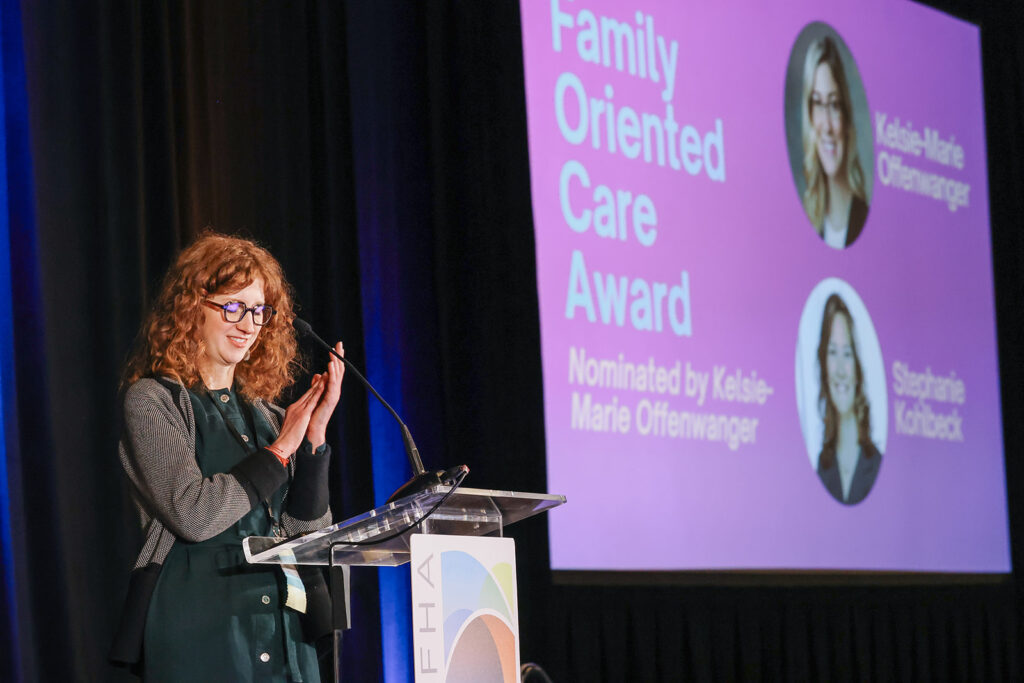
Stephanie Kohlbeck and Kelsie-Marie Offenwanger – Family Oriented Care Award

This Families & Health SIG-sponsored award recognizes clinicians and researchers who incorporate the principles of family-oriented care into their day-to-day work with families managing their health.
The Integrated Pediatric Behavioral Health (PCBH) care team at Marshfield Clinic Health System (MCHS) is dedicated to innovation and community wellness, serving predominantly rural areas across 30 counties and one territory in Michigan. Approximately 33% of children in these areas live in poverty, with 86% classified as medically underserved. Notably, over 70% of pediatric patients at MCHS are insured by Medicaid. A Provider Satisfaction Survey indicated that 88.1% of providers found PCBH “moderately” to “extremely helpful,” with 91% expressing likelihood to accept integrated visits in the future.
The PCBH team consists of Dr. Stephanie Kohlbeck and Dr. Kelsie-Marie Offenwanger, both fellowship-trained at MCHS, who emphasize immediate, holistic interventions for children, adolescents, and their families. They also consult with the medical team, enhancing care delivery. Dr. Kohlbeck leads specialty clinics focusing on complex conditions, while Dr. Offenwanger’s background in community health and youth advocacy informs their outreach efforts.
MCHS provides same-day access to mental health services within primary care settings, yet many patients remain unaware of these offerings. The team is seeking grant funding to enhance awareness by developing bilingual resources and promotional materials for patients, families, and providers. Increasing familiarity with PCBH services aims to reduce stigma and promote early intervention, ultimately decreasing the need for specialized behavioral health services.
By equipping primary care providers with materials on common mental health issues, the PCBH team enhances patient understanding and facilitates timely access to care. This approach aligns with best practices, reinforcing MCHS’s commitment to patient-centered care and whole-person treatment.
Looking ahead, the PCBH Pediatrics team at MCHS aims to expand its services and continue developing innovative strategies that prioritize collaboration, communication, and cultural sensitivity in caring for families.
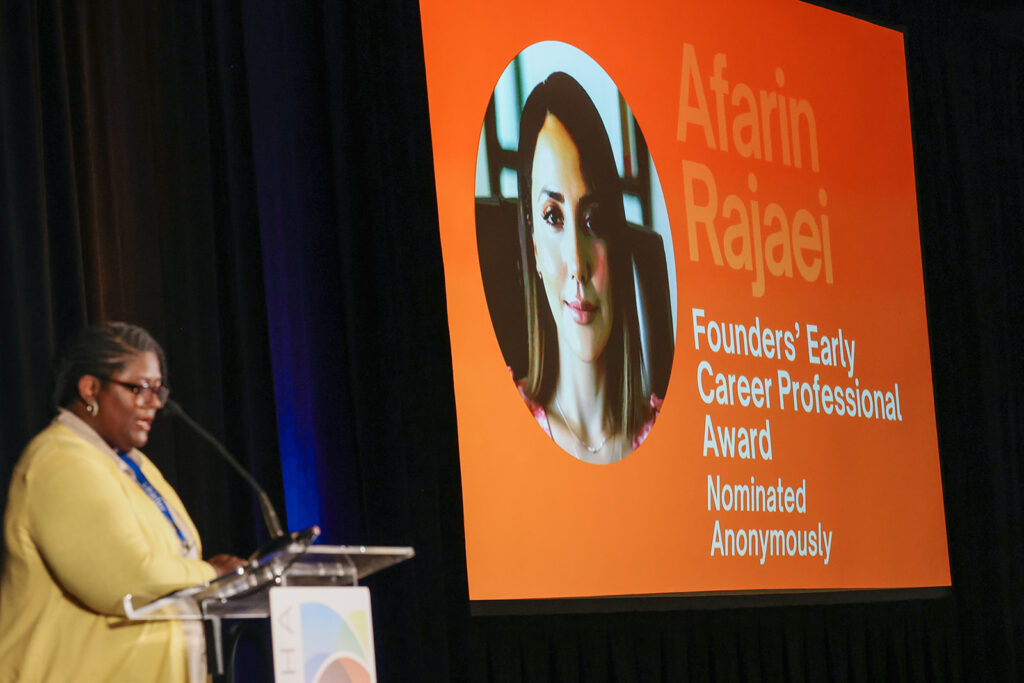
Afarin Rajaei – CFHA Founders’ Early Career Professional Award

The annual CFHA Founders’ ECP Award serves as the highest recognition for an early career professional’s contributions to the field of integrated care.
Dr. Afarin Rajaei has made significant contributions to the field of family therapy through her innovative research, impactful teaching, and dedicated clinical practice. Since earning her Ph.D. in Medical Family Therapy from East Carolina University in 2021, where she also received a Certificate in Health Communication, Dr. Rajaei has been recognized for her excellence, receiving awards like the Outstanding MedFT Graduate Award and the Mel Markowski MedFT Scholarship.
As an Assistant Professor at Alliant International University, Dr. Rajaei shapes the future of family therapy by teaching courses in Group Therapy, Medical Family Therapy, and more. She is also an Approved AAMFT Supervisor, guiding and mentoring aspiring therapists. Her research, which addresses chronic illness in couples, the biopsychosocial-spiritual model, and mindfulness in cancer-related distress, has been published in prestigious journals such as The Family Journal and the International Journal of Systemic Therapy, where she also serves as an Associate Editor.
In addition to her academic work, Dr. Rajaei runs a private practice, Afarin Rajaei Therapy, and has clinical experience in various settings, known for her client-centered, compassionate approach. Her influence extends to mental health advocacy, as demonstrated by her widely followed public Instagram page, where she promotes mental health awareness to over 100,000 followers.
Dr. Rajaei’s impactful contributions to research, teaching, and clinical practice exemplify the qualities of an outstanding early career professional. She is a deserving recipient of the CFHA Founders’ Early Career Professional Award, as her work continues to push forward the field of family therapy.
Miriam Crinion – REC Research Fellow

This competitive award supports the work of a trainee or early career professional whose research project significantly contributes to the field of integrated care. CFHA is proud to support Miriam Crinion’s project entitled, “Evaluating the Impact of Integrated and Co-Located Behavioral Health Care in a Pediatric Primary Care Setting.” The two aims of Miriam’s project are to assess differences in the reach of integrated compared to colocated services as measured by the percentage of primary care appointments that result in contact with an integrated or co-located behavioral health clinician within 180 days, and to assess differences in dose (number of in-person or telehealth therapy visits) between co-located and integrated services of families.
Congratulations to our award winners and thank you for your contributions to integrated care! You can view the CFHA Awards Lunch here:
2023 Annual Report

CFHA Luminaries Reflect On Whether The Vision For Integrated Care Has Been Realized
By Joellen Patterson, PhD, LMFT
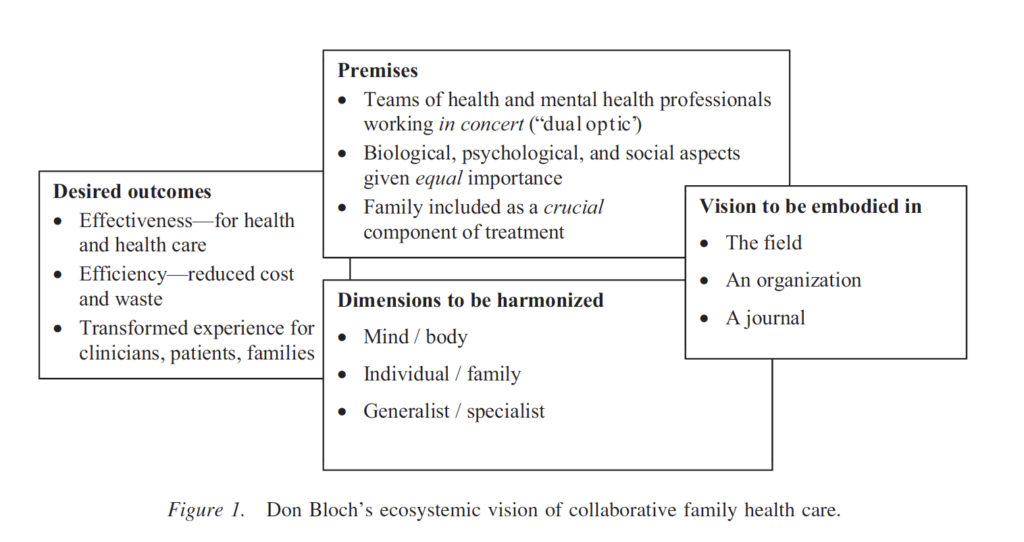
The foundation of this small project was a curiosity about whether, and if so to what extent, Don Bloch’s (physician, key founder of the Collaborative Family Healthcare Association) ideals for integrated care as voiced at Wingspread (first CFHA meeting) have been realized in the world of integrated care today. C.J. Peek wrote an article nearly ten years ago about where integrated care stood in respect to Bloch’s ideals at that point in time, and this short paper is meant be a near 10-year follow-up to Peek’s work (Peek, 2015). This project was motivated by the ongoing selection process for a new Families, Systems, and Health (FSH) editor, in the hopes that a reflection of where integrated care was, where it stands now, and where it may would help inform the selection committee. (Since the inception of the project those editors have now been selected.)
From December 27, 2022 to January 27, 2023, the following people were interviewed about the state of integrated care, especially in comparison to its original formulation as presented at the 1994 Wingspread conference: Dr. C.J. Peek, Dr. Susan McDaniel, Larry Mauksch, Dr. John Rolland, Dr. Gene Kallenberg, Dr. Bill Doherty, and Dr. Mac Baird. These individuals were asked about successes of integrated care, current roadblocks to increased adoption and implementation of integrated care, the role of the family, and thoughts and ideas of future direction for FSH. Though many of the interviewees prefaced their answers by stating they had moved on from working in integrated care in the last ten or twenty years, nearly all still had insights about the successes and areas of growth for the field and for FSH.
Don Bloch’s vision as visualized by C.J. Peek (Peek, 2015)

Interview Findings
All interviewees agreed that integrated care has made progress in the last 20-30 years. Some interviewees thought of this progress as more widespread acceptance of the importance of integrated care, while others pointed to the increased number of practices instituting (their own version of) integrated care. At the same time, interviewees were quick to point out roadblocks. One of the two primary roadblocks for increased adoption and implementation of integrated care is the lack of conducive financial payment systems. McDaniel sees the fee-for-service model as inhibiting further growth of integrated care and implementation of its central tenets. This was Peek’s opinion too, as he expressed that payment systems are still anchored in the mind-body split. At the same time, he notes that several sites have been able to take advantage of alternative payment schemes like shared savings and pay-for-performance, though these are still workarounds. The second primary roadblock expressed among interviewees is the “how to” of implementation, about which there still isn’t enough research. See below for more commentary on this.
Roadblocks for increased adoption and implementation of integrated care
- Existing payment models (e.g. fee-for-service) do not support high levels of integration
- Need more evidence (RCTs, or other studies with comparison groups) supporting effectiveness of integrated care
- Lack of unified conceptual definition of integrated care
- Mind-body division still prevails as dominant healthcare view
- Lack of manualized implementation strategies
- Lack of involvement of family
One of Bloch’s original visions for healthcare was that it would incorporate both the individual and the family. All interviewees agreed that the family is still not involved or utilized in integrated care. There were a variety of reasons posited for this idea. One was that there is no financial system (e.g. reimbursement) in place that rewards any involvement with the family. This problem is compounded by the public’s lack of awareness of why including the family might be beneficial, especially when many primary care appointments are preventative. Peek noted that one way in which family is involved is through healthcare systems’ involvement of communities, of which families are the primary unit of care.
Another part of Bloch’s vision was the balance between the mind and the body. While most interviewees still lamented healthcare’s stuck place in this split, there were some ideas about how insight into this faux-duality may be shifting. Peek mentioned that research about chronic illness, ACEs, health behavior changes, and depression as a “foreground” issue have all encouraged the medical field to see the mind and body as intermixed. Mauksch thinks, too, that that increased insight into the epidemiology of mental health issues have made integration more logical, as such epidemiology sees the mental and physical colliding. Despite these at least conceptual advancements into the shallow nature of the mind-body split, the dualism still dominates business models and inhibits further integrated care adoption.
A third part of Bloch’s vision was about the importance of striking a balance between generalists and specialists. Not many interviewees commented about this, but the ones who did agreed that there was there are still too much emphasis/reliance on specialists. At the same time, Rolland thought that it makes a lot of sense for families to be involved in specialty clinics because, presumably, the person is already sick.
In addition to being asked about Bloch’s original vision, interviewees were asked about CFHA, the role of research in supporting integrated care, and FSH. There was consensus among the interviewees about the unbalanced nature of CFHA’s member (physicians and behavioral health providers) makeup. There are various reasons for this. For one, as Mauksch put it, it’s never been that balanced. Another reason in Mauksch’s eyes is that physicians have less time and are faster moving than BHPs, and often don’t have the same research and academic training as do some BHPs. Third, many (if not most) physicians still don’t have the incentive to incorporate integrated care into their clinics because of their clinics’ clinical leadership and administration.
A number of interviewees had suggestions about research needed to advance integrated care. These suggestions fell mainly into two categories: proving the utility of integrated care and explaining the “how-to” implementation of integrated care. Many people advocated for the need for more studies with comparison groups illustrating the effectiveness of integrated care. Regarding the second point, many interviewees expressed the need for studies about how to “fit everything together” for an integrated care setting, including business model, delivery model, and education and training. In addition to these two main points, there were rumblings among several interviewees about how there isn’t even agreement in the research about what integrated care looks like (e.g. a singular model).
Some interviewees had thoughts about FSH and what types of articles it should publish. Rolland for example, thought the journal needs more conceptual papers (and fewer data-driven articles), needs to be more multi-disciplinary, and needs to refocus on how to make integrated care truly systemic. Mauksch had somewhat different ideas and expressed the negative consequences of contributors conflating the collaborative care approach and the PCBH approach, stating that PCBH does not have nearly the same strength of evidence as does the collaborative care approach. Kallenberg also had ideas for the journal and stated that there are too many special interest articles and one-off articles reviewing how integrated care was implemented at a single site. He suggested that the journal needs more papers about measuring the effects of integrated care, papers examining integrated care operational difficulties, and articles that target primary care physicians more in an attempt to realize the importance of integrated care. Thoughts and suggestions for FSH can be summarized by the following list:
Suggestions for FSH
- The journal needs fewer “one-off” studies about case successes
- The journal needs more rigorous studies involving comparison groups proving effectiveness of integrated care
- The journal needs more articles addressing workflow, training, and operational issues
- The journal needs to have articles that better attract physicians
- The journal needs more conceptual papers (Rolland)
Conclusion
In summary, while the field of integrated care continues to make advances, it still faces external impediments, like financial payment systems rooted in the mind-body split, as well as internal difficulties, like lack of a “one-size-fits-all,” or even a “one-size-fits-most” approach for implementation. Nevertheless, there is more support for the idea of integration and its potential benefits for patients, healthcare systems’ pocketbooks, and providers. It is an open question in what capacity FSH will propel integrated care going forward. Will it focus on disseminating rigorous research to further prove the efficacy of integrated care? Will it provide more manualized approaches for non-integrated healthcare systems to move toward integration? Will it be a platform for conceptual and experimental inquiry into how integrated care may look?
February, 2023
References
Peek, C. J. (2015). Don Bloch’s vision for collaborative family health care: progress and next steps. Families, Systems & Health, 33(2), 86.
JoEllen Patterson, PhD, LMFT, is Professor in the Marital and Family Therapy Program at the University of San Diego. She is also Associate Clinical Professor of Family Medicine, Global Health, and Psychiatry at the University of California, San Diego, School of Medicine.
__________________________________________________________________–

Why Texas?
Why Texas?
Do We Engage Or Protest States With Regressive Healthcare Policies?
As the CEO of the Collaborative Family Healthcare Association (CFHA), I want to address a topic that has been on many of our minds: our decision to host conferences in states with regressive policies related to healthcare for women and other justice issues that impact healthcare professionals and the patients we serve.
To begin, I’ll state at the outset that our decisions are made with careful consideration and a conscious stance of engagement rather than absent protest. And, we don’t pretend to have all the right answers. We, meaning the CFHA board and staff, together with member leaders, come together and make the best decision possible for each situation. So, here are some of the reasons why we chose Texas as location for our upcoming conference.
A Stance of Engagement
Our decision to hold conferences in states with controversial policies is not an endorsement of those policies. Rather, it reflects our commitment to engagement. We believe in the power of dialogue and the importance of being present in these regions. By choosing to engage, we aim to foster discussions, share knowledge, and provide support to our members who are directly impacted by these policies. On balance, we asked ourselves whether being present and engaged was more efficacious than protesting via our absence and it was hard to see protest winning over presence.
Supporting Our Members in All States
We have members across the country, including in states with regressive healthcare policies. Abandoning these states would mean abandoning our members who live and work there. These dedicated professionals rely on CFHA for support, resources, and community. We cannot turn our backs on them during challenging times. Instead, we choose to stand with them, offering our support and ensuring they know they are not alone. This is especially true for Texas where some of our most ardent members, including our President, hail from. These teams are caring for women as they struggle with reproductive issues. They are caring for migrants as they struggle with immigration issues. They are caring for LGBTQ+ populations as they struggle to find support. It does not feel right to abandon those care teams.
Because They Asked
We host conferences in areas that members ask us to host conferences, and our San Antonio conference came to be as a result of an application put forth by a group in the southwest Texas region, much the same way our last conference was held in Phoenix, AZ as a result of an Arizona-based group. The planning committee, which hails from that region, is excited to show off their state and the many ways they have overcome barriers to care, including political barriers. This is crucial not just for Texas but for care teams coming from other states with regressive policies to have exemplars and encouragement that you can still provide quality, team-based care in difficult political environments.
A Long-Term Perspective
The issues we face in healthcare are complex and multifaceted. They will not be resolved overnight, and we cannot afford to ignore red-leaning states for decades to come. Change is a long-term process, and we must remain engaged and active in all regions to drive progress. By being present and vocal, we can contribute to meaningful change over time. In other words, we don’t see these issues resolving quickly and thus a decision to protest by avoiding red-leaning states could essentially mean 10 or more years of absence from these states.
Fostering Dialogue and Support
Our conferences are more than just events; they are opportunities for connection, learning, and growth. They provide a platform to discuss pressing issues, share best practices, and support one another. In states where healthcare policies are regressive, our conferences become even more critical as they offer a space for care teams to come together, find solidarity, and develop strategies to navigate the challenges they face. We have opportunities to have these discussions in San Antonio. And we have created a virtual Community Conversation in September ahead of the conference to ensure that we are primed to play an active role in supporting our Texas-based care teams.
Respecting Different Approaches
I want to acknowledge and respect that some may choose protest as their form of engagement. Protest is a powerful tool for change, and those who choose this path have our respect and support. However, given our relatively small size and purchasing power, CFHA believes that our greatest impact comes from being present and actively engaged.
I want to emphasize that our choice to host conferences in all states is driven by a commitment to our members and the belief that engagement is a powerful catalyst for change. We will continue to stand by our members, support their work, and foster dialogue, no matter where they are located. I’m sure some of you disagree with our stance and some may even choose not to come to the conference as a result of its location. I get it. These are tricky times around the dinner table. We just hope we can still be at the dinner table and continue the conversation.
Photo by Aarón Blanco Tejedor on Unsplash

Shaping the Future Together: Our Vision for Integrated Care

February 2024
As we look ahead, I’m filled with optimism and excitement for the journey we’re embarking on together. Our mission at the Collaborative Family Healthcare Association (CFHA) has always been to push the boundaries of integrated care, and today, I want to share with you the key strategies we’re focusing on to make that vision a reality. This isn’t just about the work we do; it’s about who we become in the process – a community of healthcare professionals and allies breaking down unnecessary barriers to team-based, whole-person care.
1. Workforce Development: Planting the Seeds Early
Imagine if our understanding of integrated care began not just in professional training but as early as high school and undergraduate studies. That’s the future we’re building towards. We’re introducing a new membership tier aimed at connecting with students at the high school and undergraduate levels. This effort is all about going upstream to influence the foundation of training in integrated care. We are also looking to partner with accreditation bodies and other organizations with power in the guild training spaces. By weaving integrated care principles into the fabric of early education, we’re not just preparing the next generation of healthcare professionals; we’re revolutionizing the way care is conceived from the ground up.
2. State by State Policy Development: Local Action, National Impact
From the rolling hills of Tennessee to the bustling streets of New York, we’re nurturing state-based efforts to reshape policy and practice. Our work in states like GA, CA, TN, NY, and WI is a testament to our belief in the power of local action to drive national change. Each state has its unique challenges and opportunities, and by supporting state-specific initiatives, we’re laying the groundwork for a more inclusive, integrated healthcare system across the country.
3. Reflecting the Whole Care Team: A United Front
Integrated care is not just about bringing medical and behavioral health professionals together; it’s about valuing every voice in the healthcare chorus. That’s why we’re creating a Medical Director for Integrated Care position and partnering with esteemed medical societies like AMA, AAMC, and AAFP. Our goal is to diversify our membership and truly reflect the entire care team. Just take a look at our spring conference presenters and you’ll see the breadth of representation we are aiming for. This collaborative approach is key to creating a holistic, patient-centered care model that recognizes the contributions of all healthcare providers.
4. Embracing and Elevating New Voices: A Home for All
Diversity, equity, and inclusion (DEI) are not just buzzwords for us; they’re principles that guide our actions. We’re committed to being a home for all, where every member feels valued and heard. Our new Content Creators Workgroup is just one way we’re creating opportunities for our members to share their talents and perspectives. By amplifying diverse voices, we’re enriching our community and shaping a more inclusive future for healthcare.
5. Value and Measurement-Based Care: The Proof Is in the Outcomes
In today’s healthcare landscape, demonstrating value is paramount. We’re championing the importance of engaging in value-based contracting discussions within your institutions through our two dedicated workgroups focused on value-based care contracting for integrated care and measurement-based care promotion. This commitment to value and measurement-based care is crucial for advancing our mission and proving the effectiveness of our approach. I would like to personally ask every director or team lead to consider setting a goal this year for learning more about your organization’s contracting efforts and to begin trialing an approach to measuring your patient outcomes, especially for PCBH (I’m a big fan of the Outcome Rating Scale, for example). CoCM is already ahead of the game in this respect.
Join Us in This Journey
This is a call to action for each of you. Get excited, dig in locally, and engage with our workgroups, Special Interest Groups (SIGs), and events. Your participation is the fuel that propels us forward. Having witnessed nearly 20 of our 30 years of our impact and growth I have good reason to be optimistic that we can continue to create foundational change.
As we embark on this journey, remember that this is our collective mission. It’s about creating a future where integrated care is not just an ideal but a reality for everyone. Let’s establish our true north and walk this path together, with optimism, dedication, and a shared vision for what healthcare can and should be. And, by the way, this vision is not static. If we are missing something here, let us know.
Here’s to our shared future,
Neftali Serrano, PsyD
CEO, Collaborative Family Healthcare Association
Written with assistance from ChatGPT.
Photo by Joshua Earle on Unsplash
2022 Annual Report

The New Research and Evaluation Council
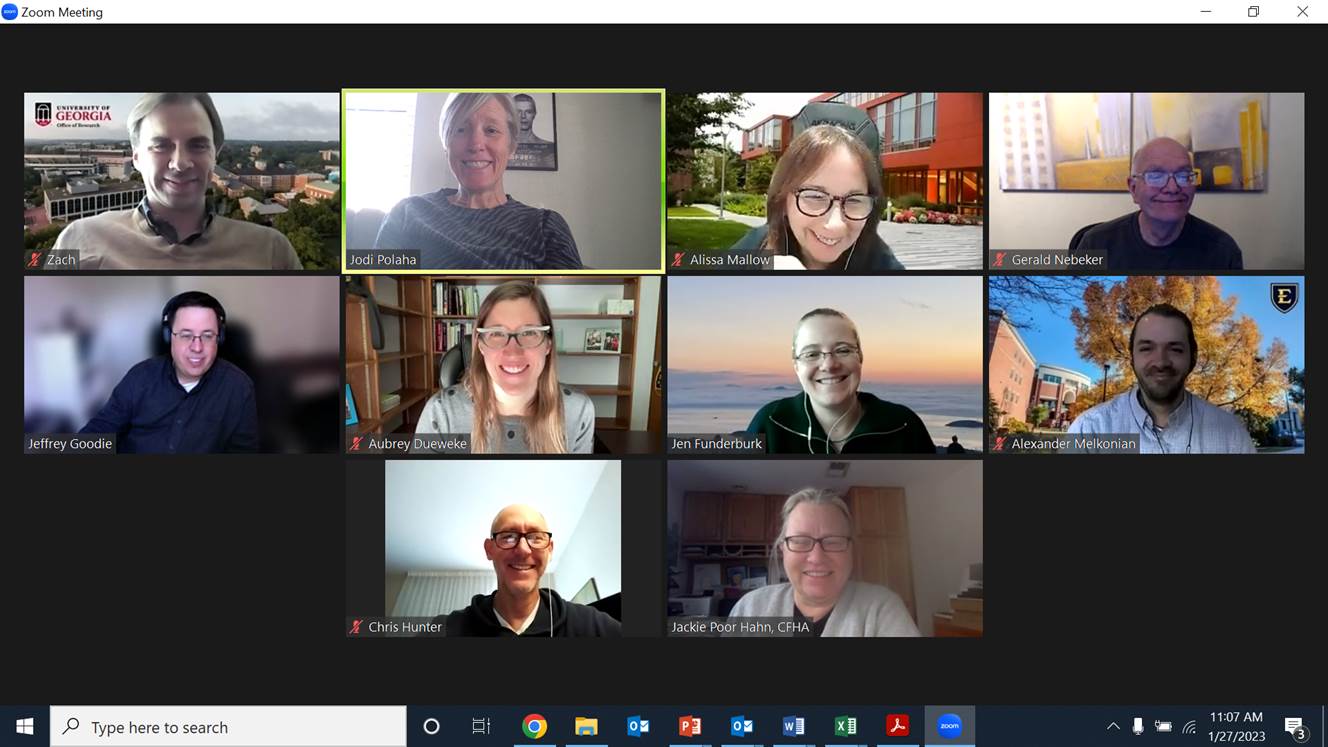
Meet the new Research and Evaluation Committee (REC) Leadership Council! Last month, council members Zach Cooper, Jodi Polaha, Alissa Mallow, Gerald Nebeker, Alexander Melkonian, Jeffery Goodie, Christopher Hunter, Committee co-chairs Aubrey Dueweke and Jennifer Funderburk, and CFHA staff member Jackie Poor-Hahn met for the first meeting of 2023 to set goals for the group.
The Research and Evaluation Committee is charged by the Board of Directors to grow interest and enthusiasm among CFHA members regarding research and to create opportunities for CFHA members to actively participate in research and program evaluation related to integrated care. Over the last ten years, the REC has implemented several initiatives that support this mission, including:
- Creation and coordination of the Research and Evaluation training track at the annual conference, which facilitates presentations that equip attendees with practical knowledge and skills via “how to” lessons relevant to program evaluation, quality improvement, and/or research
- Establishment of the REC fellowship, which funds research and evaluation projects that assist the professional development of students and early career professionals while contributing to the field of integrated care
- Coordination of the Evidence-To-Go sub-committee, which produces 1-page briefs that summarize new research findings for CFHA membership
At the annual conference in Boise, ID, the REC hosted a research summit where over 40 attendees worked together to brainstorm several exciting new initiatives the REC could support in the coming years.
Moving into 2023, the REC Leadership council is planning to host a series of webinars to disseminate information about research-related topics that could inform the development of new initiatives (i.e. the creation of a measures repository and establishment of a CFHA research mentorship program). The group aims to use those webinars to gauge member interest in future initiatives.
If you are interested in joining the REC, please reach out to Aubrey Dueweke (dueweke@etsu.edu) or Jen Funderburk (Jennifer.Funderburk@va.gov).
The next REC meeting is on Thursday, February 16th at 12 PM ET. The group will be discussing How to Conduct Research to Impact Workforce Policy and Practice. Register here.

African-American Contributions To The Field of Integrated Care
African-Americans have made innumerable contributions to the field of integrated primary care and behavioral health. In honor of Black History Month, we’d like to take a moment to recognize some of these accomplishments and celebrate the individuals behind them.
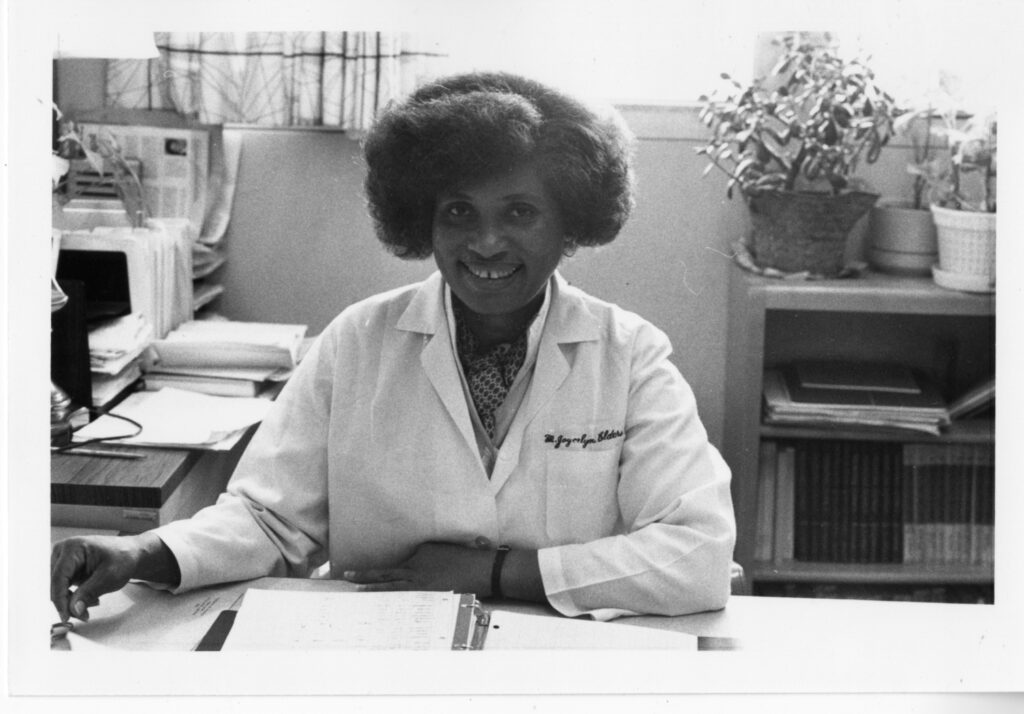
The National Institutes of Health recognizes Dr. Joycelyn Elders as one such pioneer in this field. As an advocate for comprehensive healthcare delivery – which includes both physical health services and mental health services – she worked tirelessly with various agencies at federal, state, and local levels throughout her career to increase access to integrated care for all Americans; however, her focus was particularly on underserved communities that included African-American populations.
Dr. David Satcher also stands out among his peers for his commitment to this cause: he initiated nationwide efforts within Department Of Health And Human Services (HHS) organizations during his tenure as Assistant Secretary For Health from 1998–2001 and later served two terms as Surgeon General from 2001 – 2006 under President Clinton where he continued promoting integration between mental health services and primary healthcare practices via The New Freedom Initiative program intended “to eliminate disparities in access…for people living with mental illness in America” through collaborations among HHS offices including Centers For Disease Control & Prevention (CDC), Substance Abuse Mental Health Services Administration (SAMHSA), National Institute Of Mental Health (NIMH).
Additionally, there are numerous grassroots initiatives led by African-Americans across our country working tirelessly every day towards providing quality integrated care services within their respective communities despite limited resources or support. Here within our CFHA community, we celebrate the African-American primary care providers, social workers, psychologists, care managers, psychiatrists, clinic administrators, and others who make contributions each day to improve the health of their communities.
As we celebrate, however, we also recognize the work that needs to be done within the primary care and behavioral health workforce to increase representation. Despite the significant contributions of African-Americans to integrating primary care and behavioral health, they remain underrepresented in both fields. According to data from 2018, African-Americans make up only 5% of all physicians and 5.1% of all psychologists nationwide. This is significantly lower than their population representation (13.6%). By contrast, social work has a higher representation at 19.9% (data from Zippier.com).
With Dr. Martin Luther King Jr. we dream of a day when patients have ample opportunity to see themselves in the care teams that care for their health and when that healthcare bridges the gaps in outcomes for all groups, but particularly our black brothers and sisters.

A Peak Into CFHA’s Storied Past: 29 Years Ago
New years often inspire us to look to our futures but they also often cause us to re-examine our past, so as CFHA turns 29 this January we thought we would give you a snapshot of the very first CFHA newsletter from the Fall of 1994.
While much has inevitable changed in the healthcare landscape and within our organization there is also great continuity in terms of philosophy and mission. Page 2 of the newsletter provides a good summary of the early efforts in what was then termed, “Collaborative health care.” You will likely also note a marked emphasis on family therapy and medical family therapy, emphases that continue to be a part of our rich community, but are no longer the singular emphasis of the association. The movement towards integrated care is indebted to the fore-runners of collaboration between healthcare disciplines, especially those involved in family-oriented efforts to transform healthcare delivery.
Names like Susan McDaniel, Tom Campbell, William Doherty, David Seabird, Alan Lorenz, Jepi Hepworth, John Rolland and many others dot the landscape of this early transformative period. It would be less than a year later when CFHA would host its first conference in Washington, DC title, “Transforming the Practice of Health Care: the Collaborative Solution.” For historical reference it is important to note that from the time of CFHA’s inception it would still be nearly 8 years until Katon and colleagues publish their IMPACT trial results and several years before PCBH implementation trials began in Seattle, WA. So these fore-runners were indeed ahead of their time in many ways.
Enjoy this time machine flashback. We will post more of these in the coming year as we work towards 30 years of promoting the integration of physical and behavioral healthcare in the US health system.
Photo by Mohamed Osama on Unsplash
2021 Annual Report

CFHA Statement in Support of Access to Comprehensive, Evidence-Based Reproductive Services
The recent Supreme Court decision overturning federal precedent guaranteeing protection for people who can become pregnant to seek comprehensive, evidence based reproductive services, which includes abortion care, is antithetical to the goals of integrated, whole-person care. The ruling has been opposed by the World Health Organization, American Medical Association, American Psychological Association, American Academy of Family Physicians, American Academy of Pediatrics, American Psychiatric Association, National Association of Social Workers and the American College of Obstetrics and Gynecology. CFHA stands with these organizations in condemning this infringement on access to healthcare services and inhibiting patient relationships with their healthcare team. Privacy and body autonomy are crucial components of effective healthcare, a fact that this ruling ignores.
The Collaborative Family Healthcare Association (CFHA), in accordance with our mission and values, supports seamless collaboration between healthcare providers and their patients and families. In our view any policy or law negatively impacting those relationships is detrimental to a patient’s health and impedes the ability of care teams to effectively do their jobs.
Our members now face fear, confusion and uncertainty about their ability and rights related to how they can best support patients faced with crisis pregnancies and related medically complex circumstances. By returning the issue to the states, this ruling allows state laws to criminalize actions of patients seeking healthcare, as well as their advocates and healthcare providers. Additionally, most of our membership work with underserved populations who comprise the portion of the nation most likely to be negatively impacted by this ruling with even fewer options in desperate circumstances.
CFHA members provide care to patients in all 50 states working to improve access to integrated physical and behavioral health on modern care teams that break down the silos of the antiquated health system. Now many of those members and teams are in states with restrictive laws and harsh penalties. They do not deserve to face fear in providing evidence based medical information and care and should not be subject to criminal charges.
We are an action-oriented community. We will bring together our community in our culture of shared learning and support our members who need critical information about how best to serve their patients in this new and uncertain landscape as part of our upcoming Community Conversations series. And CFHA will continue to advocate for patient-provider relationships free of fear and restrictions.

Pediatric Group Details the Ways Integrated Care is Poised to Meet the Mental Health Crisis
June 22, 2022 – The Pediatrics Special Interest Group (PED SIG) at the Collaborative Family Healthcare Association (CFHA) has issued a response to the growing awareness around the pediatric mental health crisis. The response, posted below, is part of an invitation to CFHA members to join the PED SIG in various efforts aimed at addressing access to care issues from the standpoint of integrated care.
From The PED SIG:
“The right care at the right time in the right place”
Pediatrician offices are often the place where families first go for advice on developmental and – behavioral concerns. In addition, pediatricians have longitudinal relationships with children that provide opportunities for understanding those concerns in context and remove the stigma associated with it.
Pediatric integrated care contributes to improve access to behavioral health care in the following ways:
- Integrating behavioral health consultants and other roles such as care enhancers into pediatric teams, and building on the longitudinal and trusting relationships pediatricians have with families.
- Promoting early identification of developmental and behavioral health concerns through universal surveillance and screening.
- Enhancing the pediatrician’s ability to treat the whole child under a bio-psycho-social approach through interdisciplinary collaboration and education.
- Providing timely access to behavioral health interventions in a “one stop shop”, without delays or referrals.
- Making behavioral health interventions widely available to the highest number of children through population health approaches.
- Tailoring evidenced-based interventions to a variety of presentations and acuity levels under a stepped care model.
- Supporting parents in providing protective nurturing environments for children to thrive in from the time they are born, and with no stigma attached.
- Assessing the needs of the family and offering additional supports to connect them with resources and social supports in the community.
- Building collaborations, coordinating, and tracking services in the community.
- Tracking patient progress and outcomes, triaging to higher levels of care as needed.
All this from an expert team of pediatricians, behavioral health consultants, and care enhancers working collaboratively to provide the right care at the right time in the right place. Join the PED SIG at CFHA today to join colleagues working on implementing the above and improving their skills as members of the modern care team. Pediatric primary care can be an essential component of solving the access issues in pediatric behavioral health care.

Board of Directors Meet To Solidify CFHA Diversity & Equity Commitments
May 14, 2022 (Raleigh, NC)
Neftali Serrano, PsyD, Chief Executive Officer
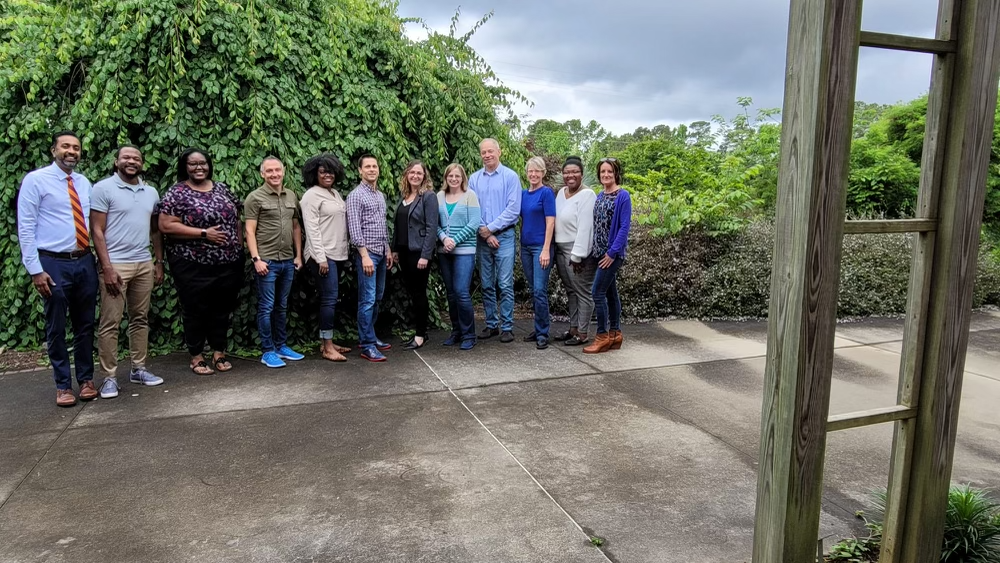
After not having an in-person meeting in over three years due to the pandemic the CFHA Board of Directors met in person in Raleigh, NC at the JC Raulston Arboretum to discuss how to continue to pursue Justice, Equity, Diversity and Inclusion (JEDI) commitments as an association. The day included a discussion on the appointed member process, an important way that boards solicit diversity in their ranks as well as a review of progress on JEDI issues and plans to include expert external facilitation.
The board also engaged in a review of its strategic plan, last updated in 2019. The board generally affirmed the relevancy of the plan including a strategy screen and series of “Big Questions” developed by the board at that time. The in-person quality of the meeting, board members felt, especially helped catch-up newer board members who were not part of that process.
The CFHA board meets 6 times per year and will next have an in-person meeting as per tradition at the annual conference in October. Work on JEDI issues will be on-going in collaboration with the member-led Just Medicine Committee


.
2021 CFHA Conference – Enduring Content
The recordings for CFHA 2021 Annual Conference are available. CEUs are available for almost every session.
Conference – Includes concurrent sessions, plenary sessions
$349 – Professionals, members or non-members
$49 – Trainee members (students, post-docs, fellows)
Extended Learning Opportunities More information
$99 – One extended learning opportunity
$198 – Two extended learning opportunities
$297 – Three or more extended learning opportunities
$49 – Trainee members (Students, post-docs, fellows)
$98 – Trainee members (Students, post-docs, fellows)
$147 – Trainee members (Students, post-docs, fellows)
2020 Annual Report

Primary Care Behavioral Health is Ready to Serve During the COVID19 Pandemic
April 10th, 2020

2019 Annual Report
2019 Annual Report
We are excited to present 2019. We encourage you to take a moment to review the report and learn more about CFHA’s mission, membership, and future endeavors!

CFHA Supports Bill Removing Barriers To Prescribing Life-Saving Opioid Treatment Medications
For immediate release: September 5, 2019
Rochester (NY), Chapel Hill (NC), Denver (CO), Madison (WI) – The Board of the
Collaborative Family Healthcare Association released the following statement today
to support legislation in Congress (H.R. 2482) that removes barriers to physician
prescribing of life-saving opioid treatment:
“As a national coalition of leaders in integrated care we are acutely aware of
the access-to-care crisis for patients with opioid use disorders. We also
acknowledge the paradox that exists where physicians who prescribe
controlled substances cannot prescribe medication (eg. Buprenorphine) for
addiction to these controlled substances without additional training and
registration.
The legislation in the House of Representatives (H.R. 2482) would amend
section 303(g) of the Controlled Substances Act (21 U.S.C. 823(g)) to eliminate
the separate registration requirement for dispensing narcotic drugs in
schedule III, IV, or V. The legislation also calls for a national education
campaign to encourage providers to provide Medication Assisted Treatment
(MAT).
We support this effort which would enable more providers to provide MAT
and thus save more lives. We also support the effort to educate providers as
to the benefits of integrating substance abuse care into their practices. Our
firm belief is that substance abuse care should be treated in much the same
fashion as chronic illnesses (eg. diabetes) and that with integrated care
teams we can support our nation’s primary care providers to confidently
face the opioid epidemic.”
About the Collaborative Family Healthcare Association (cfha.net)
The Collaborative Family Healthcare Association is a national member-driven non-profit organization
dedicated to making the integration of mental and physical health the standard of care nationally. Our
interdisciplinary membership of physicians, patients, clinicians, educators, nurses, behavioral health
professionals, foundations, payers, advocates and researchers work to promote comprehensive and
cost-effective models of healthcare delivery that integrate mind and body, individual and family,
patients, providers and communities. CFHA has staff in Rochester, NY, Denver, CO, Chapel Hill, NC &
Madison, WI.
Media Contact: Neftali Serrano, PsyD, Chief Executive Officer, nserrano@cfha.net
Twitter: @cfha_tweet, Website: http://cfha.net
2018 Annual Report
CFHA Supports Bills Increasing Access to Behavioral Healthcare for Mental Health and Opioid Crises
For immediate release: May 21, 2018
Rochester, NY – The Board of the Collaborative Family Healthcare Association
released the following statement today to support legislation in Congress (H.R. 5531
& S. 2613) that expands access to behavioral healthcare:
“As a national coalition of leaders in integrated care we are acutely aware of
the access-to-care crises for patients with behavioral health and opioid use
disorders. We also know that many behavioral health providers stand ready
to serve but are unable to do so due to reimbursement restrictions that are
currently part of the laws governing the Medicare program. These mental
health providers, including marriage and family therapists and master’s
degree practitioners deserve an opportunity to serve their country and its
citizens by helping to confront the access-to-care issue.
- The legislation in the House of Representatives (H.R. 5531, Sec. 6) would provide for reimbursement of services provided by these duly licensed clinicians.
- The legislation in the Senate (S. 2613) would provide for reimbursement of Licensed Clinical Social Workers to be reimbursed for providing behavioral support for medical conditions, typically billed under ‘Health & Behavior Codes’.

We support these efforts for the general good of our people and because the future of integrated care depends on them. We cannot have a future where every medical setting provides efficient, accessible integrated care if we continue to have a dearth of qualified clinicians in those settings that are able to receive payment for those services.”

About the Collaborative Family Healthcare Association (cfha.net)
The Collaborative Family Healthcare Association is a member-driven non-profit organization dedicated to making the integration of mental and physical health the standard of care nationally. Our interdisciplinary membership of physicians, patients, clinicians, educators, nurses, behavioral health professionals, foundations, payers, advocates and researchers work to promote comprehensive and cost-effective models of healthcare delivery that integrate mind and body, individual and family, patients, providers and communities.
Media Contact: Neftali Serrano, PsyD, Executive Director, nserrano@cfha.net
Twitter: @cfha_tweet, Website: http://cfha.net