About
You’re Invited!
This SIG is open to all current CFHA members. Learn more about joining.
To promote a family-centered approach within CFHA and other healthcare organizations and to foster collaboration in scholarship, education/training, practice, and policy.
Leadership

Shelly Dalton

Angela Hiefner
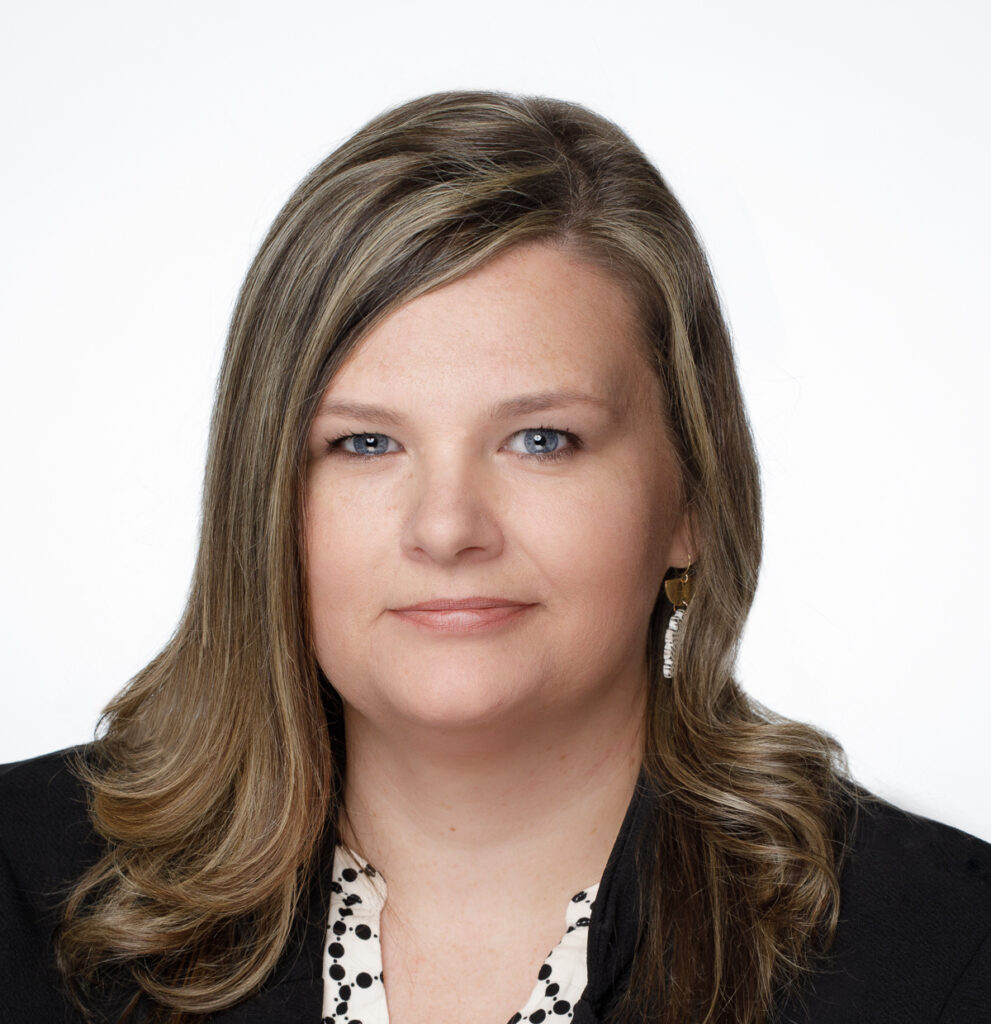
Misty Schmidt
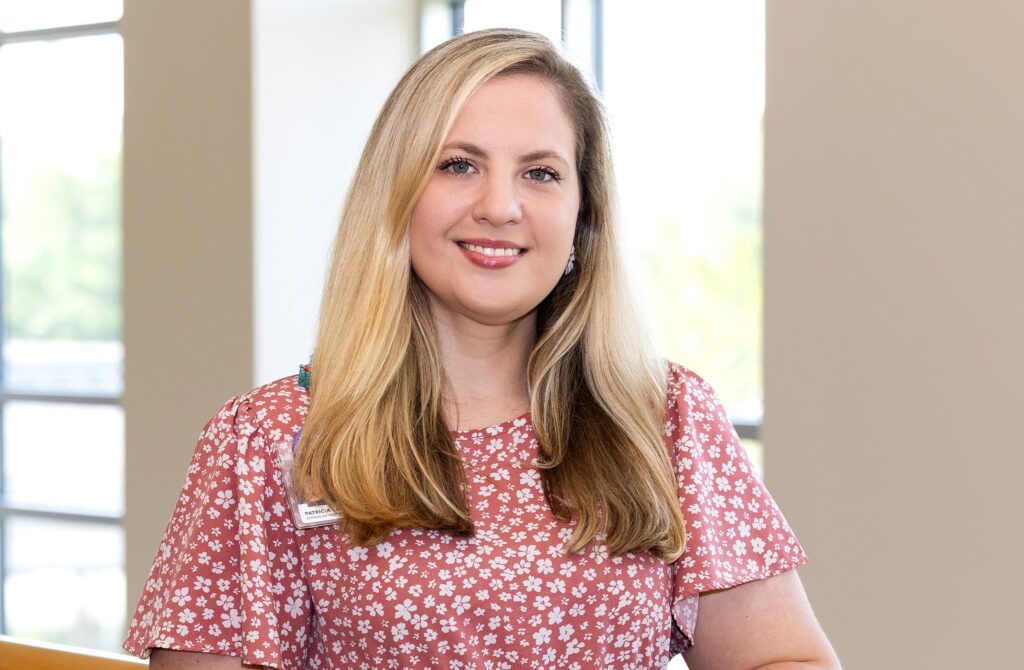
Patricia Huerta

Federico Mendez
Webinars
-
Quality Improvement Strategies for Systematic Case Review
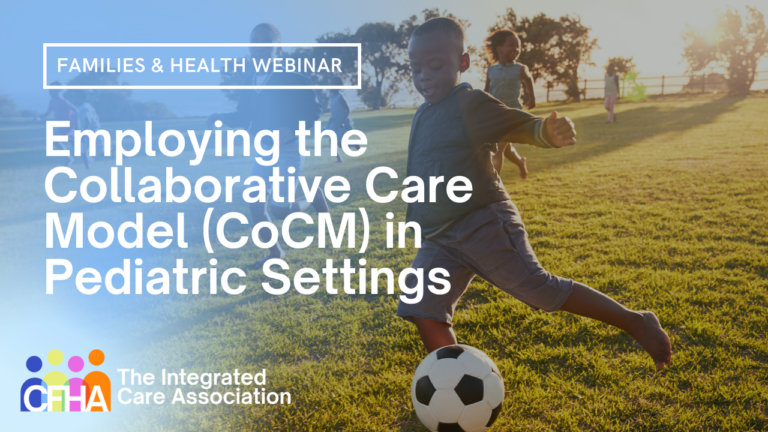
Join CFHA’s Families and Health Special Interest Group (SIG) for a webinar featuring a presentation on employing the Collaborative Care Model (CoCM) in pediatric settings by Dr. Virna Little and Nicole Portrude.
-
Families & Health SIG Webinar: Working with Couples Presenting with Medical Concerns
The first F&H SIG webinar of 2026 will feature a presentation on working with couples presenting with medical concerns by Lizee Nuñez Love, MS, LMFTA.
-
-
F&H SIG Webinar: Beyond the Individual: Reimagining Single Session Therapy w/ a Family-Centered Lens
Single Session Therapy (SST) has shown promising results in improving mental health outcomes in fast-paced, resource-limited settings. But what happens when we move beyond the individual and engage the entire family unit? This session introduces the concept of Family-Centered Single Session Therapy (FCSST)—a framework that blends the core strengths of SST with principles of family-centered […]
-
Families & Health SIG Webinar: From Awareness to Action: Behavioral Strategies to Address HIV Stigma
This session will begin with a concise overview of HIV epidemiology, transmission facts, and the origins of stigma, setting the stage for understanding its impact on patient care and the family system. Participants will then explore multiple behavioral communication techniques and actionable strategies to dismantle stigmatizing attitudes and foster more empathetic, supportive interactions in both […]
-
Families & Health SIG Community Discussion: Advancing Family-Centered Care in Healthcare Systems
Join CFHA’s Families & Health SIG for a collaborative conversation about the health system-level changes needed to better support family-centered care. As part of CFHA’s broader initiative, we want to hear from professionals across disciplines: Your insights will help shape future efforts in scholarship, education, training, policy, and practice, ensuring that healthcare truly prioritizes families.
-
Families & Health SIG Meeting – Ethical Practice in Integrated Care: Expert Panel
We hope you will join us to learn from an expert panel on the ethics of integrated care. Drs Jennifer Hodgson, Tai Mendenhall, Angela Lamson, and Lisa Tyndall are the authors of a recent chapter on ethics in healthcare settings for Medical Family Therapists in the new AAMFT Systemic Ethics Textbook. This is a great […]
-
Families & Health SIG Meeting: Integrated Behavioral Health Startup Program
In 2018, when a call to action for PTSD prevention and the need to expand behavioral health support was recognized at a systemic level, a partnership between Texas Tech University and the University Medical Center’s (UMC) Children’s Hospital emerged. UMC stakeholders wanted to develop a way to provide bed-side assessment and psycho education to patients […]
-
Families & Health SIG Meeting: Weight Stigma
Weight bias, the social devaluation, discrimination, and prejudice towards those perceived to be overweight or obese, is a life-threatening health risk and a prevalent experience for much of the global population. It occurs across multiple settings including the workplace, media, families, and healthcare. When controlling for BMI, weight bias has been separately linked to multiple […]
-
February 2024 Families and Health SIG Meeting
At our February meeting, the FHSIG hosted our Annual Conference Proposal Match-Making Meeting. Last year’s match-making meeting contributed to the 40+ family-centered conference presentations presented at the 2023 conference in Arizona! Our Annual Proposal Match-Making Meeting allows for collaboration between members on conference proposal ideas. In addition to our match-making meeting, there will also be […]
-
Medical Families at Risk: A Psychotherapeutic Approach to Care for Physicians and their Families
Physicians’ emotional life is challenging. On top of the extra demands that Covid brought, the medical culture requires physicians to work long hours, to be exposed to patients suffering and dying. Moreover, patients expect physicians to act without mistakes and be perfectionistic bulwarks. Nothing less is accepted. The result of long periods of absence, on-call […]
-
-
Going Beyond Patient- and Family- Centered Dementia Care: The Need to Explore the Multisystemic Family Terrain
Using a multisystemic family model, this presentation will illustrate the value of screening and assessing family processes to promote optimal dementia care. This session will also address professional roles and responsibilities by discipline regarding post-diagnostic care, team collaboration, and communication skills.
-
Diversity, Inclusion, and Belonging: Implementing DIB Initiatives in the Work Environment
In recent years, implementation of diversity, inclusion, and belonging (DIB) initiatives is a pattern that has been in the forefront of most business strategies. The practice of creating an diverse and inclusive work environment leads to greater employee satisfaction, greater opportunity to innovate, and a variety of perspectives. Implementing DEI initiatives requires examining an organization’s […]
-
Creative Funding Strategies for Family-Based Models of Care: Payer and Provider Perspectives
Clinicians and payers alike have historically struggled to extend beyond patient-centered care to engage family members in ways that are meaningful, cost-effective, and efficient with use of time and staffing resources. In this webinar, representatives from a regional health plan in Colorado and an evidence-based population health pediatric model, with providers in San Francisco, come […]
-
COVID-19 Pandemic: A Multisystemic Approach to Address Family and Healthcare Provider Challenges
The COVID-19 pandemic has proven to have pervasive impacts on all aspects of family life. Some of these impacts are drastically increasing as reports across the world are sounding the alarm about the upcoming post-COVID mental health pandemic. In a March 11th, 2021 interview, Dr. Fauci spoke of the “long-term ravages” that are ahead of […]
-
Assessing Family-Level Processes, Lifestyle, Resources, and Social Capital in Primary Care Settings with the Family Health Scale
Primary care is an ideal setting to deliver preventative, family-based interventions. However, until recently a standard instrument to assess family health in clinical settings did not exist. To fill this gap, our interdisciplinary team of public health researchers, family scientists, mental health providers and a primary care physician, developed, validated and published a 10-item Family […]
-
Equipping Healthcare Providers to Work Systemically with Patients & Families During Telehealth Visits
In March 2020, family- and relationally-focused biopsychosocial (BPS) health services in the U.S. transitioned to telehealth as the primary mode of health service delivery across the continuum of care. While many health systems are currently navigating a return to in-person care delivery, it is clear that telehealth will remain an integral part of our healthcare […]
-
Families & Context in Primary Care
Family-centered care maintains mutually beneficial partnerships between healthcare providers, patients, and patients’ families in treatment planning, delivery of services, and outcomes. Eliciting patients’ and families’ perspectives on healthcare priorities and relevant contextual influencers will contribute to more informed and better-defined health outcomes. In this webinar, the presenters demonstrated how to complete family-centered: contextual interviews, brief […]
-
-
Family Caregiver Stress: How to Measure it and Why
Nearly 1 in 4 Americans provide caregiving for a loved one, a service estimated at $470 billion per year and 21 work hours per week. Many of these caregivers are unpaid and often experience stress and health complications. Human service agencies and healthcare systems are incentivized to help patients by identifying and supporting their family […]








Resources
-
Family-Centered Care: A Guide for Changes Across the Healthcare System
Written by Angela (Hiefner) Andrews, Jerica M. Berge, Michelle R. Dalton, Jennifer Hodgson, Angela Lamson, Kelly M. Roberts, Lisa Tyndall, Melissa Welch With support from the Collaborative Family Healthcare Association In the pursuit of fully integrated, interdisciplinary healthcare, the Collaborative Family Healthcare Association (CFHA) aims to engage patients and their families as equal partners in […]
-
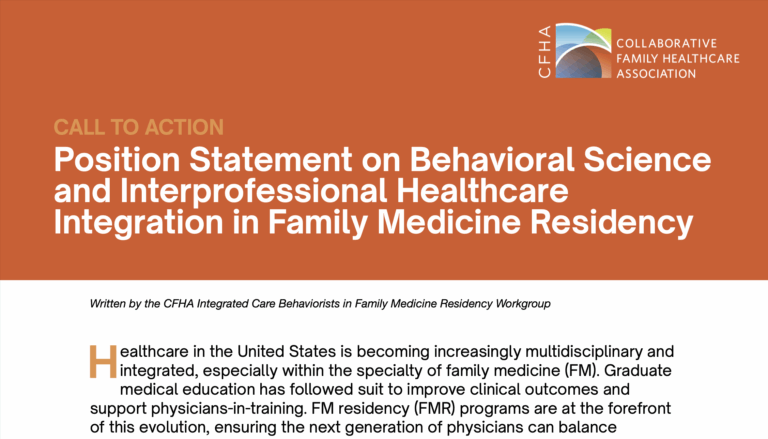
Position Statement on Behavioral Science and Interprofessional Healthcare Integration in Family Medicine Residency
This position statement from the CFHA Integrated Care Behaviorists in Family Medicine Residency Workgroup highlights the essential role of Behavioral Science Faculty in preparing residents for today’s integrated, team-based primary care.
-
-
-
Family Systems in Healthcare Training Opportunities
Medical Family Therapy Training Opportunities: Coursework and Internships Antioch University – New England Coursework Jefferson University Coursework Loma Linda University Coursework/Internship Mercer University Coursework/Internship Nova SouthEastern University Coursework Ohio State University Coursework Oklahoma Baptist University Regis University Coursework San Diego State University Coursework/Internship Saint Mary’s University (MN) Coursework Texas Woman’s University Coursework/Internship University of Georgia […]
-
Family Systems in Health Policy
Health Systems & Payers Plan and Provider Opportunities to Move Toward Integrated Family Health Care Strengthening Family Caregiving Programs and Policies Through Collaboration: Lessons from Six States Towards a Universal Model of Family Centered Care: A Scoping Review
-
Family Systems in Healthcare Research
Overview The Development of and Evolution of Family Therapy Research: It’s Impact on Practice, Current Status, and Future Directions Medical Family Therapy Research: Part 1 Medical Family Therapy Research: Part 2 Medical Family Therapy Research: Part 3 Methodological Considerations Advancing Medical Family Therapy Through Research: A Consideration of Qualitative, Quantitative, and Mixed-Methods Designs Relational Theory […]
-
Cultural Competency & Diversity
Diversity, Inclusion, Excellence, and the Law in Higher Education American Association for the Advancement of ScienceAssociation of American Colleges and Universities Diversity, Equity, and Inclusion Excellence Handbook of Diversity and the Law: Navigating a Complex Landscape to Foster Greater Faculty and Student Diversity in Higher Education Undergraduate Medical Education and Medical Schools Association of American […]